


Read the Game Differently.
Daily Sports Betting Picks | Betting Analysis | CFB | NBA | MLB | NFL | Game Previews
By Matt Godbee
5:44 PM EST on March 11, 2026
Major League Baseball Hall of Fame snubs are an age-old topic. The debate usually centers on players who may or may not have accumulated enough statistics to earn induction. Hall of Fame voters seemingly operate with a baseline for worthiness—informal thresholds for both hitters and pitchers. While induction isn’t entirely predicated on reaching milestones like 3,000 strikeouts or 500 home runs, adding those achievements to a résumé is often a near surefire way to punch a ticket to Cooperstown.
Because of this, debates about borderline candidates are plentiful. But the argument itself has become old and exhausting. A more interesting discussion is the Hall of Fame worthiness of players who dominated for shorter periods of time but fell well short of traditional career benchmarks. Players who may have won multiple MVP or Cy Young awards before their production declined can be compared against the “stat compilers”—players who enjoyed long careers of solid production but were rarely considered among the best in the league. Yet the game has evolved into an entirely different era, and the modern game demands a different skillset. If baseball itself has changed so dramatically that traditional milestones are becoming increasingly unattainable, then the Hall of Fame voting process may need to reconsider how it evaluates greatness.
The “stat compiler” has been well branded throughout the history of baseball. It is an evaluation that has transcended generations of Hall of Fame voting. Interestingly, stat compilers often receive the Hall of Fame nod largely due to eclipsing benchmark numbers. Though it can take a decade on the ballot, these players frequently collect enough votes to gain induction—though not without some criticism.
Over the course of two decades, these players often participate in deep playoff runs, win a World Series or two, and eventually become ambassadors of the game. They turn into household names in their cities—and sometimes across the country. That long track record inevitably strengthens their case for the Hall of Fame.
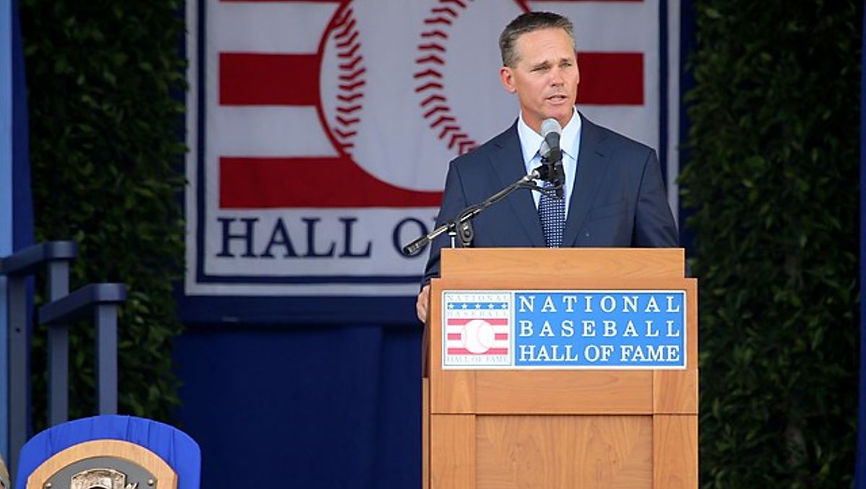
Craig Biggio, a seven-time All-Star second baseman for the Houston Astros, certainly falls into the stat-compiling category. He played for 20 seasons, never finishing higher than fourth in the MVP race and capturing only one Silver Slugger award. His induction into the National Baseball Hall of Fame and Museum was somewhat controversial, but never seriously in doubt, as he remained on the ballot for only three years. Like many long-tenured players, he was a fan favorite in Houston—a fixture of professional baseball throughout the 1990s and 2000s—but never quite rose to the very top tier of players in the National League.
Harold Baines, the longtime journeyman outfielder elected to the Hall of Fame in 2019, may represent the most egregious example of the stat-compiling inductee. Baines was never a serious MVP candidate and was selected to only six All-Star teams during his 22-year career. He owns one of the lowest WAR totals among Hall of Fame position players and recorded more than 100 RBIs just three times. Baines led the league only once in any major batting category, and advanced metrics cast an even dimmer light on his overall impact compared to other Hall of Fame position players. Baines was never going to reach Cooperstown through the writers’ ballot after receiving less than the required five percent of the vote, until a Today’s Game Era panel elected him under what some claimed were biased circumstances.
But if the Hall of Fame electorate has historically rewarded longevity, the opposite type of player often finds himself on the outside looking in. These are players whose peaks burned brightly, even if their careers did not stretch across two decades. For a stretch of four or five seasons, they may have been among the very best players in the sport—collecting MVP awards, Cy Young trophies, and league-leading statistics. Yet injuries, decline, or simply the unforgiving nature of professional baseball prevented them from accumulating the career totals that traditionally sway Hall of Fame voters.
It is this group of players that presents the more fascinating Hall of Fame debate. Players like Johan Santana, who dominated both the American and National Leagues for seven straight seasons and won two Cy Young Awards in a three-year span. Tim Lincecum won two consecutive Cy Young Awards, while Dale Murphy captured back-to-back MVP awards but ultimately fell short of the traditional Hall of Fame benchmarks.
In Santana’s case, a severe shoulder injury plagued the back half of his career in New York. Lincecum faded quickly after losing velocity and life on his fastball due to hip issues caused by his violent delivery. Murphy, meanwhile, spent much of his prime on a struggling Atlanta Braves franchise in the 1980s and was coincidentally traded just before the Braves’ dominant stretch run, robbing him of meaningful postseason opportunities.
Other similarly dominant non-Hall of Fame players followed similar paths. Don Mattingly fell off after an MVP-caliber stretch in the 1980s due to chronic back problems. Darryl Strawberry battled addiction issues that derailed what once appeared to be a Hall of Fame trajectory. Stephen Strasburg looked to be the cornerstone of the Washington Nationals franchise after showcasing elite pitching talent, but injuries limited him severely. Strasburg was able to make 30 starts in a season only three times during his career, robbing him of sustained success and a potential long-term pairing with young superstar Bryce Harper.
Dwight Gooden followed a similar arc. Despite battling drug addiction issues, Gooden produced a hugely dominant run in the 1980s, winning Rookie of the Year and the Cy Young Award in back-to-back seasons, including one of the most dominant pitching seasons in history when he captured the pitching Triple Crown. He went on to finish in the top seven of Cy Young voting in five of the next seven seasons before declining sharply later in his career.
The one thing these players all share is the immense effect they had on the game for a short period of time, earning regular-season awards that the likes of Craig Biggio and Harold Baines never attained. Though Baines and Biggio’s lengthy career paths will forever be revered in Cooperstown, the dominant runs of these short-term stars will largely be forgotten. Though they were the best players in the world for a time, their success on the field did not last long enough to eclipse the statistical benchmarks that traditionally define Hall of Fame careers.
This is not an indictment of stat-compiling players. Availability is unquestionably a requirement of Hall of Fame enshrinement and is rightfully revered in baseball circles. A player who spends two decades in the big leagues, builds a Hall of Fame-caliber résumé, surpasses historic milestones, and becomes an ambassador of the game should absolutely be elected.
However, the game—and the eras—have changed.
Pitchers and position players are no longer producing the same career paths they once did. Pitchers, in particular, are hampered by injuries due to dramatic increases in velocity and arm stress. Pitch counts are closely monitored, and starters are often removed earlier in games, reducing their chances of accumulating traditional milestones like wins and innings pitched. The once-celebrated 300-win threshold now appears nearly unattainable under modern pitching usage.
Starting pitchers routinely throw fewer than 200 innings per season. In 2025, only three pitchers surpassed 200 innings pitched. In 2001, 45 pitchers exceeded that total—and in 1985, 61 starting pitchers did so. That represents a staggering 95% decrease over roughly forty years.
The 3,000-hit plateau for position players is also becoming increasingly difficult to reach. Modern hitters are taught to maximize run-scoring potential by increasing exit velocity and launch angle, eliminating the need for infield hits or light-contact singles. Small-ball strategies have largely given way to higher-risk approaches driven by analytics, which suggest it is easier to produce runs through power rather than through multiple sequential at-bats.
As a result, teams are more willing to live with strikeouts than with low-impact singles. Players are finishing seasons with fewer hits and lower batting averages than previous generations. Yet elite players today are still compared with elite players from earlier eras, and the statistical gaps become apparent despite their exceptional skill within the modern game.
Baseball has always rewarded longevity—and rightfully so. A player who spends two decades producing at a high level while surpassing historic milestones has undoubtedly earned his place among the game’s immortals. But as the sport continues to evolve, the path to those milestones is becoming increasingly difficult. Pitchers are throwing fewer innings, hitters are producing fewer traditional counting statistics, and careers are more volatile than ever before.
If the modern game no longer produces the same statistical benchmarks that once defined greatness, then perhaps the Hall of Fame electorate must place greater emphasis on peak dominance rather than simply the accumulation of numbers. Otherwise, some of the most extraordinary stretches of brilliance the sport has ever seen may be remembered only as brief flashes rather than the Hall of Fame-caliber greatness they truly were.
