


Read the Game Differently.
Daily Sports Betting Picks | Betting Analysis | CFB | NBA | MLB | NFL | Game Previews
.jpg)
By Matt Godbee
5:44 PM EST on May 15, 2026
The NBA’s regular season may be the only thing in sports less rewarding these days than Major League Baseball unveiling its annual Hall of Fame ballot. This year’s class certainly didn’t disappoint in that regard, arriving as one of the thinnest and least inspiring ballots in recent memory.
The Hall of Fame ballot acts as a historical mirror. Twenty years later, it tells the truth about what an era actually produced. At the time, it may not feel obvious while fans are living through it, but once the names begin appearing on the ballot, the historical perspective becomes unavoidable.
That’s where modern baseball finds itself now.
The 2027 ballot, featuring names such as Mitch Moreland, Ervin Santana, Wade Davis, and Brett Gardner — with Buster Posey standing as the lone obvious Hall of Fame-caliber candidate — highlights a generation that simply failed to produce enough transcendent careers to define an era.
And it’s not just that these candidates look weaker compared to the steroid era. In many cases, they fail to measure up to the generations that came long before that as well.
Yes, the steroid era tainted portions of the record book, but it also created a generation of overwhelming statistical dominance. Baseball was flooded with towering career totals, legendary sluggers, and frontline pitchers who routinely compiled Hall of Fame resumes. The game produced wave after wave of players eclipsing 400 and 500 home runs, while durable aces piled up innings, strikeouts, and Cy Young-caliber seasons deep into their careers. This applies equally to steroid-era stars and clean players alike. For example, pitchers like Randy Johnson, Nolan Ryan, Greg Maddux, Tom Glavine and Curt Schilling — all Hall of Fame-caliber pitchers with no meaningful steroid connections — routinely threw over 200 innings while piling up 3,000-plus strikeouts and building resumes that defined the era.
Today’s game looks dramatically different.
The pitchers lack longevity, rarely reaching the benchmark career numbers that enshrined the previous generations. The days of the workhorse ace have seemingly disappeared, replaced by pitch counts, bullpen specialization, and shortened outings. Once Max Scherzer and Justin Verlander retire, the era of veteran frontline starters consistently throwing 200-plus innings while piling up elite strikeout numbers may officially disappear from Major League Baseball.
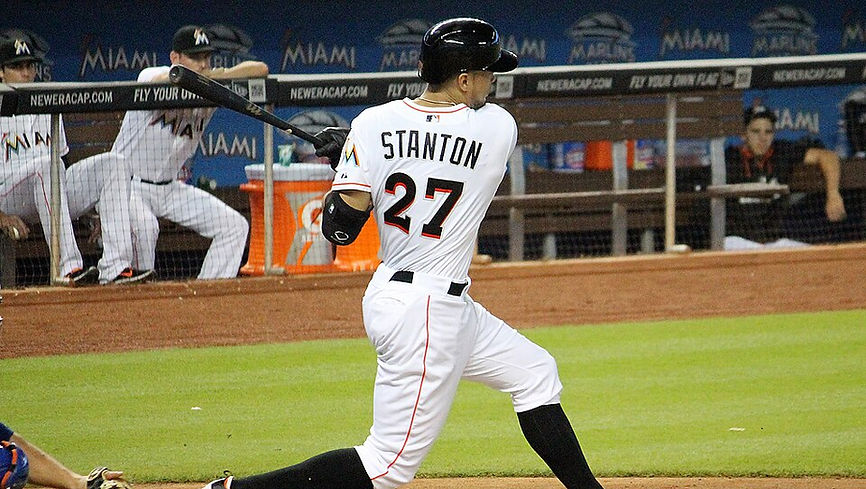
The same decline appears among hitters. Despite an offensive philosophy built around launch angles and swinging for the fences, modern baseball is producing surprisingly few historically significant power hitters. The pipeline of elite sluggers — steroids or not — has fallen off a cliff. Reaching 500 home runs now feels nearly improbable, while even the 400-home run plateau has become increasingly rare. Only a handful of current Major Leaguers have eclipsed the 400-home run mark, while just a few others are on a realistic pace.
That doesn’t necessarily mean today’s players are less talented. In many ways, modern athletes are more specialized, efficient, and analytically optimized than ever before. But the game no longer produces the same mythic career accumulation that once defined baseball greatness. The counting stats in Major League Baseball are rapidly declining, and Hall of Fame credentials are beginning to decline right along with them.
And eventually, the Hall of Fame ballot exposes that reality.
